Our approach included:
Listening to lived experience
We conducted interviews with older people who had experienced falls, capturing their stories through short, informal films. These first-hand accounts helped surface emotional, environmental and behavioural factors that data alone often misses.
Mapping the falls pathway
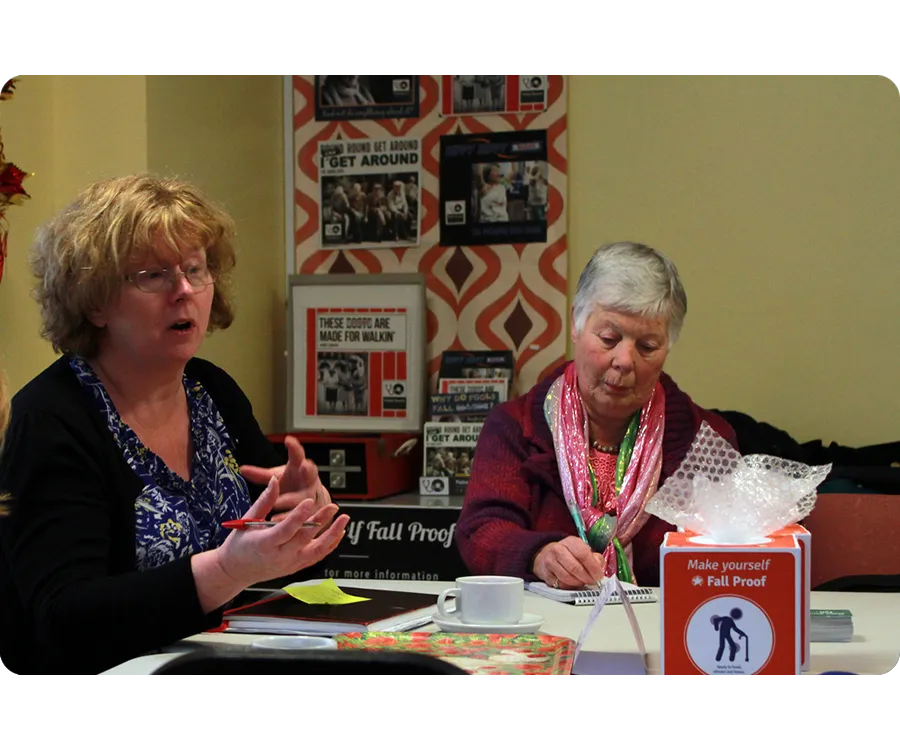
Through collaborative workshops with health, housing and social care teams, we mapped the full journey around falls prevention and response. This revealed service touchpoints, duplication, delays and critical gaps in the system.
Testing new ways to communicate
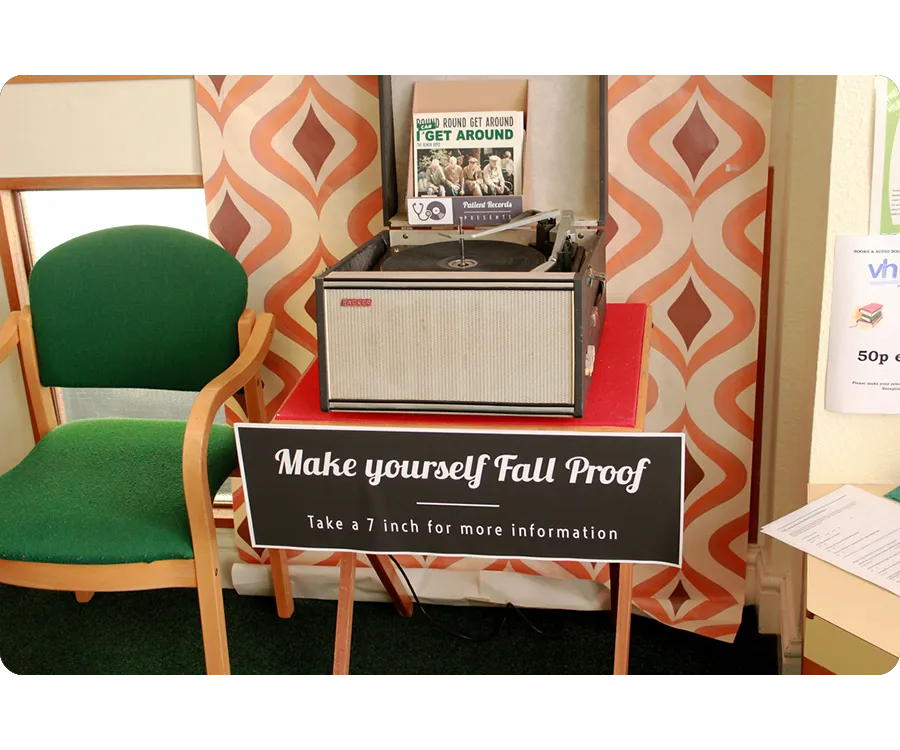
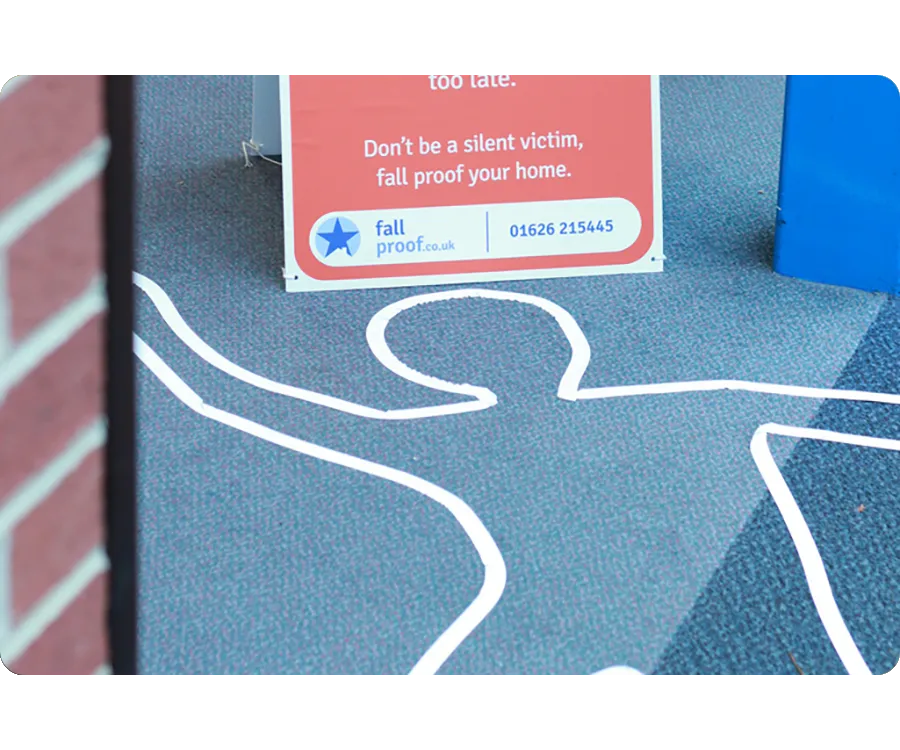
Recognising that traditional leaflets often go unseen, we prototyped bold, engaging public communication campaigns designed to start conversations and prompt action:
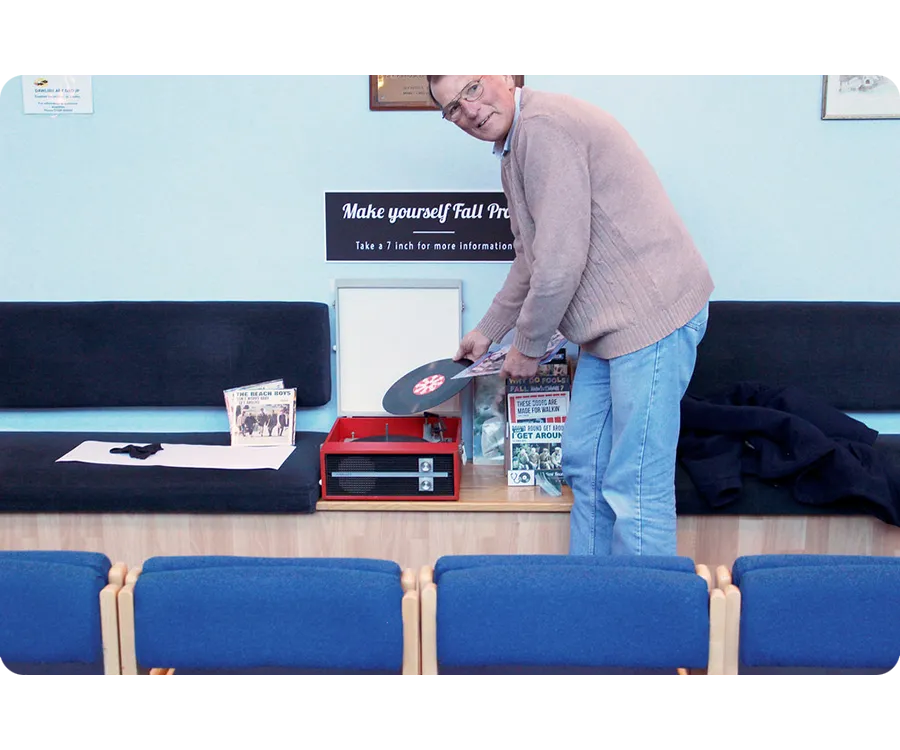
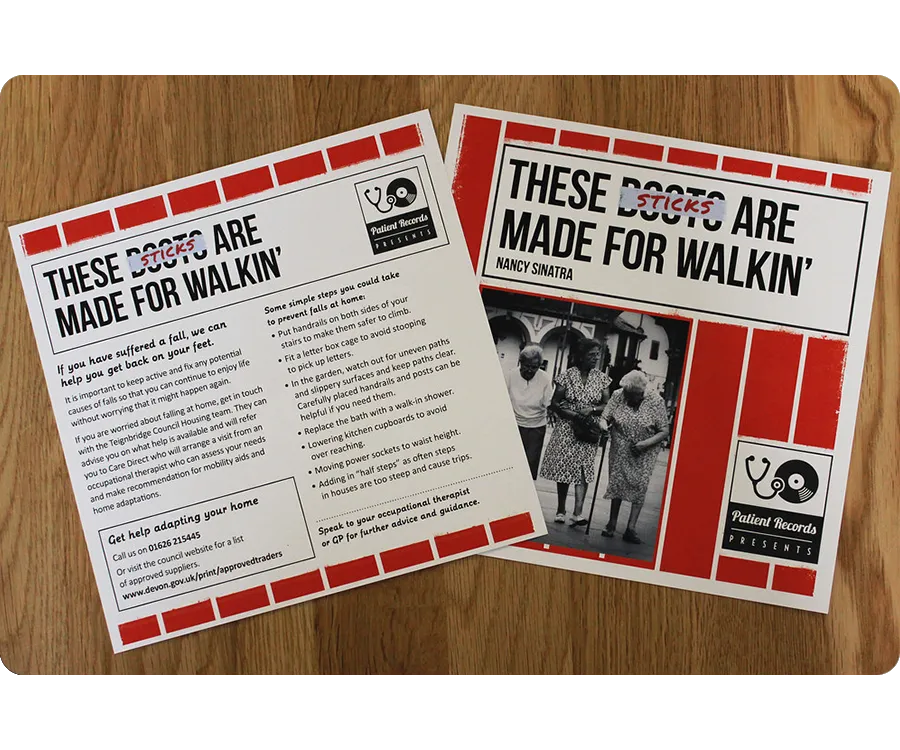
- Sound advice: a vintage record installation using familiar 1960s music to share falls prevention messages.
- Fall victim: chalk “crime scene” outlines highlighting local fall statistics.
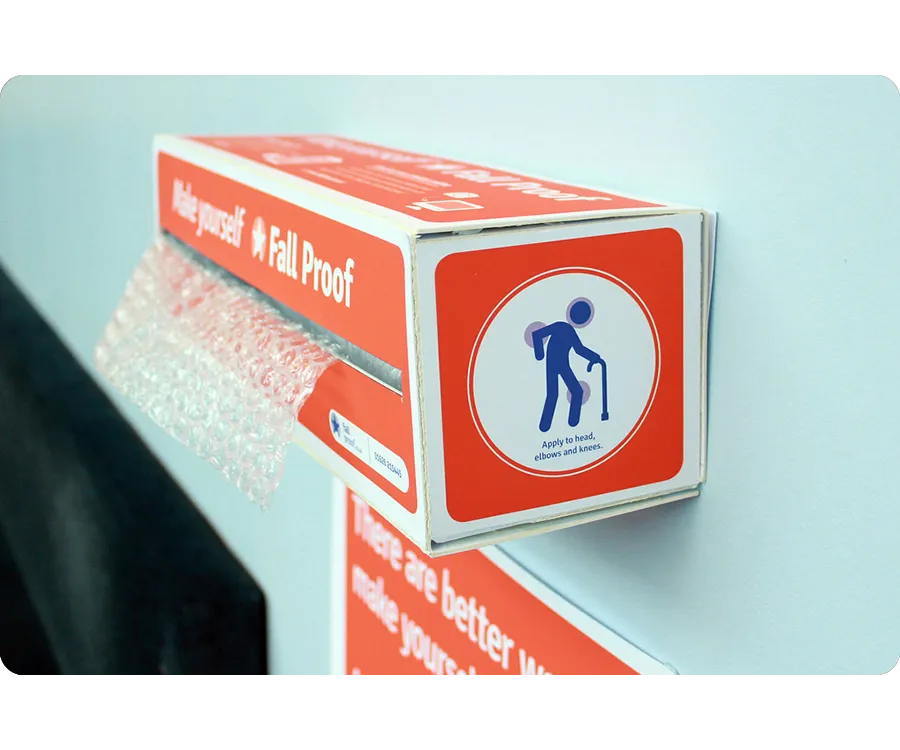
- Fall proof: a playful campaign using bubble wrap to spark interest in home safety and link residents to free home checks.
These interventions prioritised curiosity, humour and visibility over instruction.